
Blog
How to Improve Milk Yield in Dairy Cattle: Practical Tips for Farmers

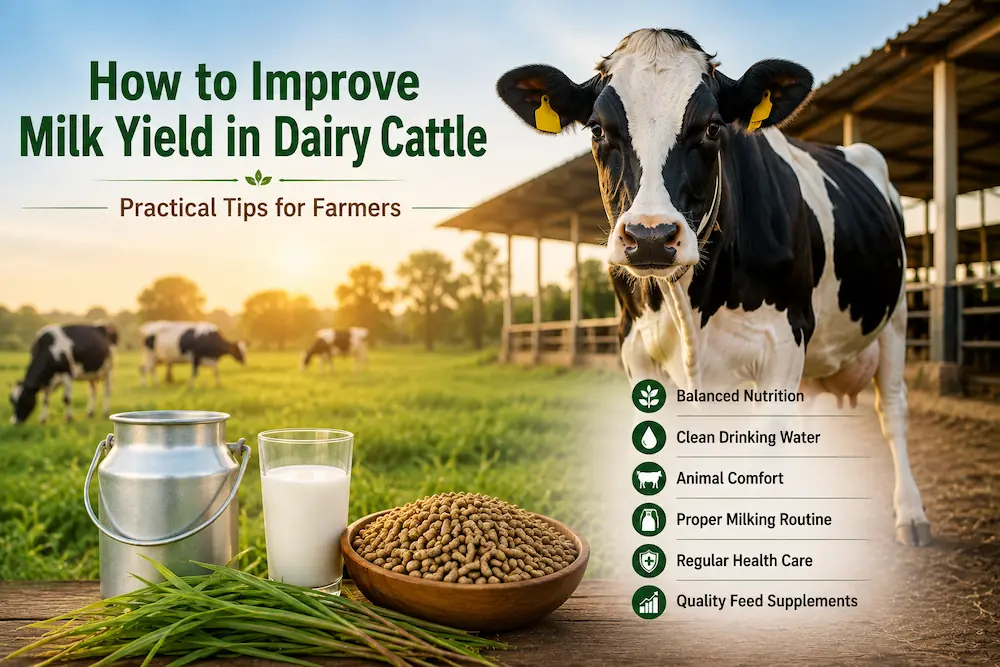
Milk production is one of the most important factors for the success of any dairy farm. Every farmer aims to increase milk yield while maintaining the health and well-being of their cattle. The good news is that with the right approach, it is possible to significantly improve productivity in a natural and sustainable way.
Understanding Milk Production
Milk production depends on several key factors including genetics, nutrition, management practices, and overall animal health. While genetics cannot be changed easily, farmers can greatly influence other factors to maximize output.
1. Provide Balanced Nutrition
Nutrition is the foundation of milk production. Cattle require a proper balance of:
- Proteins for growth and milk formation
- Energy for daily activity and lactation
- Minerals and vitamins for immunity and metabolism
Using high-quality cattle feed ensures that animals receive all essential nutrients required for optimal performance.
2. Maintain Clean Drinking Water
Water is often overlooked but plays a crucial role in milk production. A dairy animal can drink 50–100 liters of water per day depending on weather and lactation stage.
Ensure:
- Clean and fresh water availability at all times
- Easy access for all animals
- Regular cleaning of water troughs
3. Focus on Animal Comfort
Stress directly reduces milk production. Providing a comfortable environment helps cattle stay healthy and productive.
Key factors include:
- Proper ventilation in sheds
- Clean and dry bedding
- Protection from extreme heat or cold
4. Follow a Consistent Milking Routine
Consistency is important in dairy farming. Milking at the same time every day helps maintain steady production levels.
Best practices:
- Maintain hygiene during milking
- Use proper milking techniques
- Avoid sudden changes in routine
5. Use Quality Feed Supplements
Feed supplements designed for dairy cattle can significantly boost milk yield. These products provide additional nutrients that may not be available in regular feed.
Benefits include:
- Increased milk quantity and quality
- Better fat content
- Improved digestion
6. Regular Health Checkups
Healthy animals produce more milk. Regular veterinary checkups help in early detection and prevention of diseases.
Important steps:
- Timely vaccination
- Deworming schedule
- Monitoring body condition
7. Proper Breeding Management
Efficient breeding practices ensure continuous milk production cycles. Maintaining proper intervals between calving improves long-term productivity.
Conclusion
Improving milk yield is not about one single change but a combination of good practices. By focusing on nutrition, hygiene, comfort, and proper management, farmers can achieve consistent and higher milk production.
Investing in quality cattle feed and maintaining good farm practices will not only increase yield but also ensure long-term sustainability and profitability.
Krishak Agro – Supporting Farmers for Better Milk Production and Healthier Livestock.